





If you’re serious about SEO, content marketing, or running ads, then Google Keyword Planner is still one of the most powerful tools in your arsenal—even in 2026. Think of it as a compass in a vast ocean of search queries. Without it, you’re just guessing what people want. With it, you’re navigating directly toward demand.
Originally designed for advertisers using Google Ads, this tool has evolved into a full-fledged keyword research platform. It allows you to discover what users are searching for, how often they search, and how competitive those keywords are. But here’s the twist—while it’s built for paid campaigns, SEO professionals have learned to unlock its hidden potential for organic growth.
In 2026, keyword research is no longer about just picking high-volume keywords. It’s about understanding user intent, AI-driven trends, and contextual search behavior. And that’s exactly where Google Keyword Planner shines. It doesn’t just give you keywords—it gives you direction.
Why It Still Matters in 2026
You might wonder—there are so many SEO tools out there, so why stick with Google Keyword Planner? The answer is simple: data accuracy and direct integration with Google’s ecosystem. Unlike third-party tools that estimate data, Keyword Planner pulls insights straight from Google itself.
In 2026, search algorithms have become smarter, thanks to AI advancements. Google now focuses heavily on intent, context, and semantic relevance. Keyword Planner has adapted to this shift by offering more refined keyword clusters and predictive insights.
Another reason it matters is cost efficiency. While many premium SEO tools charge high monthly fees, Google Keyword Planner remains free to use (with a Google Ads account). For beginners and experienced marketers alike, it provides a solid foundation for keyword research without breaking the bank.
Latest Updates in Google Keyword Planner (2026)
AI-Based Keyword Suggestions
One of the biggest upgrades in 2026 is the integration of AI-powered keyword suggestions. Instead of just giving you related keywords, the tool now predicts what users are likely to search next. It’s like having a crystal ball for search trends.
For example, if you search for “digital marketing,” the tool might suggest future-oriented queries like “AI marketing strategies 2026” or “automation tools for small businesses.” This predictive ability helps marketers stay ahead of trends rather than chase them.
This feature is especially useful for content creators who want to build authority in emerging niches. By targeting keywords before they become competitive, you gain a significant advantage in rankings.
Improved Search Intent Categorization
Search intent has become the backbone of SEO, and Google Keyword Planner now clearly categorizes keywords into:
- Informational
- Navigational
- Transactional
- Commercial
This makes it easier to align your content with what users actually want. Instead of guessing whether a keyword is suitable for a blog or a sales page, the tool now tells you directly.
Understanding intent is like understanding your audience’s mindset. If someone searches “best laptops under ₹50,000,” they’re ready to buy. If they search “what is a laptop,” they’re just learning. Keyword Planner helps you differentiate between these stages.
Enhanced Forecasting Features
Forecasting has become smarter and more accurate in 2026. You can now see projected clicks, impressions, and conversions based on different scenarios.
Imagine planning a campaign and knowing in advance how it might perform—that’s powerful. It helps businesses allocate budgets more effectively and avoid unnecessary spending.
How to Access Google Keyword Planner
Setting Up Google Ads Account
To use Google Keyword Planner, you need a Google Ads account. The good news? You don’t have to run ads to access the tool.
Here’s how you can get started:
- Go to Google Ads
- Sign in with your Google account
- Set up your account (you can skip campaign creation)
- Navigate to “Tools & Settings”
- Click on Keyword Planner
Within minutes, you’ll have access to one of the most powerful keyword research tools available.
Navigating the Dashboard
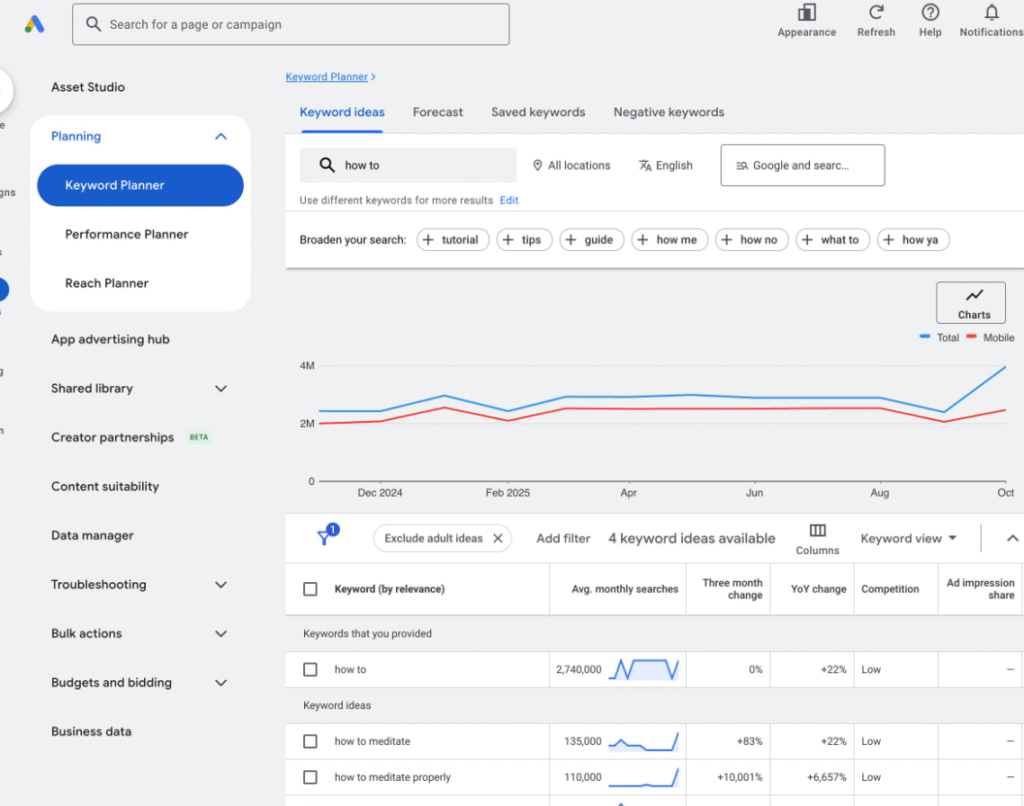
The interface is clean and user-friendly, but it can feel overwhelming at first. Once inside, you’ll see two main options:
- Discover New Keywords
- Get Search Volume and Forecasts
These are your primary tools for research and planning. Think of them as two sides of the same coin—one helps you explore, the other helps you analyze.
Understanding the Interface
Discover New Keywords Tool
This is where the magic begins. You enter a word, phrase, or website, and the tool generates a list of keyword ideas.
The 2026 update has made this feature more intelligent. It now groups keywords into themes, making it easier to plan content clusters.
Get Search Volume and Forecast Tool
If you already have a list of keywords, this tool helps you analyze them. You’ll see metrics like:
- Average monthly searches
- Competition level
- Bid estimates
This data helps you decide which keywords are worth targeting.
Step-by-Step Guide to Keyword Research
Finding New Keywords
Start with a seed keyword related to your niche. For example, if you’re in digital marketing, you might enter “SEO services.”
The tool will generate hundreds of related keywords. But don’t just pick randomly—look for relevance and intent.
Filtering Keywords Effectively
Use filters to narrow down your results. You can filter by:
- Location
- Language
- Search volume
- Competition
This helps you focus on keywords that match your target audience.
Analyzing Keyword Metrics
Metrics are the backbone of keyword research. Don’t just look at volume—consider competition and CPC as well.
A keyword with high volume but extreme competition might not be worth targeting. Instead, look for a balance.
Keyword Metrics Explained
Search Volume
Search volume tells you how many times a keyword is searched each month. Higher volume means more potential traffic—but also more competition.
Competition Level
Competition indicates how many advertisers are bidding on a keyword. High competition usually means it’s harder to rank organically as well.
CPC (Cost Per Click)
CPC shows how much advertisers are willing to pay for a click. Higher CPC often indicates commercial intent.
Advanced Strategies in 2026
Using AI Suggestions for SEO
AI suggestions are not just helpful—they’re game-changing. Use them to identify emerging trends and create content early.
Long-Tail Keyword Strategy
Long-tail keywords are longer, more specific phrases. They may have lower search volume, but they often convert better.
For example:
| Keyword Type | Example | Competition | Conversion |
|---|---|---|---|
| Short-tail | SEO | High | Low |
| Long-tail | Best SEO services in Punjab | Medium | High |
Using Keyword Planner for Local SEO
Targeting Cities and Regions
If you’re targeting a local audience, use location filters. For example, targeting “digital marketing in Punjab” will give you region-specific data.
Seasonal Trends
Keyword Planner also shows trends over time. This helps you plan content around peak seasons.
Keyword Planner for Content Marketing
Blog Topic Ideas
Struggling with content ideas? Keyword Planner can help. Just enter a broad topic and explore suggestions.
Competitor Analysis
You can also analyze competitor websites to find keyword opportunities.
Common Mistakes to Avoid
Ignoring Search Intent
Many beginners focus only on volume. But without understanding intent, your content won’t perform.
Choosing High Competition Keywords Only
Don’t fall into the trap of chasing high-volume keywords. Balance is key.
Conclusion
Google Keyword Planner in 2026 is more than just a keyword tool—it’s a strategic asset. With AI-driven insights, improved intent categorization, and enhanced forecasting, it empowers marketers to make smarter decisions.
Whether you’re a beginner or an experienced marketer, mastering this tool can significantly improve your SEO and advertising performance. The key is to use it strategically—focus on intent, leverage AI suggestions, and always prioritize relevance over volume.
FAQs
1. Is Google Keyword Planner free in 2026?
Yes, it is free, but you need a Google Ads account to access it.
2. Can I use Keyword Planner for SEO?
Absolutely. While it’s designed for ads, it’s widely used for SEO research.
3. What is the best way to find low-competition keywords?
Use filters and focus on long-tail keywords with moderate search volume.
4. How accurate is Google Keyword Planner data?
It is highly accurate because it comes directly from Google.
5. Is Keyword Planner better than other SEO tools?
It depends on your needs, but it’s one of the most reliable free tools available.